110 years of racing in outback Queensland
The Julia Creek Turf Club has been part of this community since 1916, when racing in the North West was as much about bringing people together as it was about the horses. In a region defined by vast distances and hard seasons, race day was then, and still is today, the occasion that stops everything else.
From the very beginning, Julia Creek racing carried a spirit that went beyond sport. Early meetings were patriotic fundraisers held in aid of the Wounded Soldiers' Fund during the First World War, drawing horses and horsemen from stations across the North West. Racing continued through drought, depression and another world war, and through it all the club endured. The track has seen extraordinary horses, colourful jockeys, and generations of families who've dressed up, backed their pick and shared the day together.
In 2026, we mark 110 years of that tradition. It's a milestone that belongs not just to the committee but to every person who's ever lined the rail, watched the field turn for home, and felt that particular kind of joy that only a country race day can deliver.
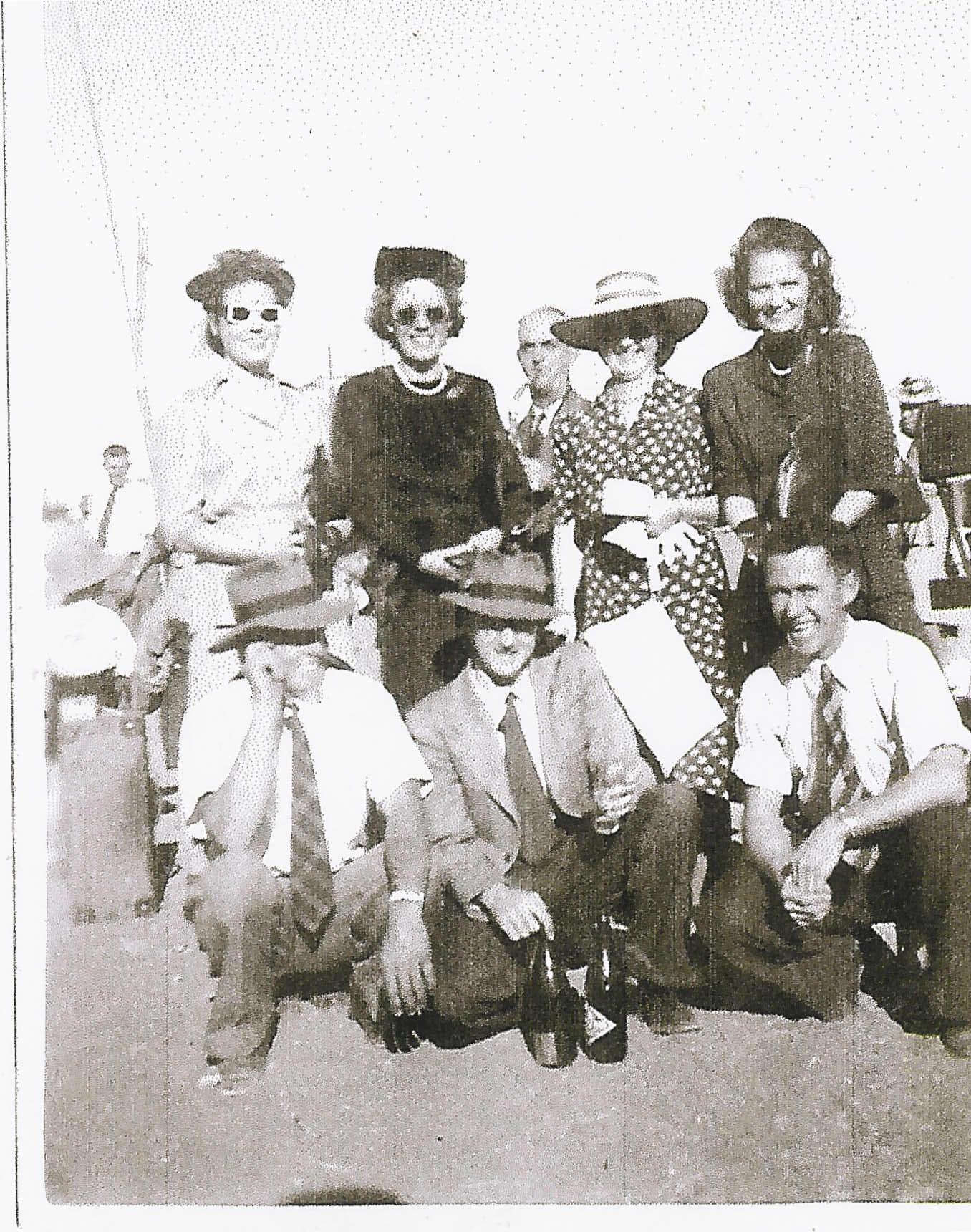
Racegoers at Julia Creek Races, circa 1940
110 years, a few milestones
Some of what we know comes from the historical record: old newspapers, club minutes, community memory. Some gaps remain. If you have photographs, programmes or stories from earlier eras, we'd love to hear from you.
The Julia Creek Turf Club is established, with the first official race meeting held in 1916. Racing in the North West was already part of station life. This was the year it became an institution.
In June 1917, the club held a patriotic race meeting in aid of the Wounded Soldiers' Fund, one of many such events during the First World War. Around 30 horses were brought in from stations including Eddington and Toorak, with five bookmakers operating and a tote in use. Club chairman M.L. Byrnes auctioned the horses the day before the meeting, raising £67. The one-day meeting was so successful that a second day was added on the spot.
Racing in the North West faced its share of hard times during the Great Depression. The cattle industry was under pressure and country communities tightened their belts, but race days remained one of the few occasions that could still bring a district together. Further research underway. If you have records or memories from this era, please get in touch.
Through this period the club operated as the Julia Creek Diggers' Races, a name reflecting the close ties between the racing community and the RSL. Race names of the era — the Army Hack Handicap, the Navy Hack Handicap, the Air Force Hack Handicap, the Anzac Plate and the Diggers' Cup — tell you everything about the spirit of the times. Racing continued regardless. A 1944 meeting returned a profit of £806, and the Diggers' Ball that followed was a fixture on the social calendar. A meeting advertised for May 1945, just days after VE Day celebrations in town, noted that "all horses come out of the paddock today." That single line captures something important about bush racing integrity: before a meeting, all horses were held in the same paddock, giving every horse equal access to feed and grazing. No advantages, no favourites. Just a fair track and the best horse on the day.
As late as 1950 the meetings were still running as the Julia Creek Diggers' Races, with eight bookmakers paying to field and a Stipendiary Steward from the North Queensland Racing Association supervising. The Patron at the time was A.R. Cooney of Auckland Downs Station — the same station that had a race named in its honour on the card. The pastoral families and the racing club were deeply intertwined. Somewhere through the 1950s the club made the transition to the Julia Creek Turf Club, most likely as racing administration formalised under the NQRA and the club became its own incorporated entity rather than running under the RSL banner. The military race names faded with the Diggers' era, and a new chapter began. The race ball remained a fixture either way.
In 1959, Macdougal won the Melbourne Cup, owned by Reg Brown of Nonda Station just outside Julia Creek. Macdougal never raced at Julia Creek himself, but Reg Brown was a long-time supporter of both the Julia Creek and Richmond race clubs and regularly raced other horses on local tracks. The Melbourne Cup came to the district, and the community celebrated one of its own. A photograph of Theresa Eckford with the Melbourne Cup remains one of the more remarkable pieces of local racing history, a reminder that North West Queensland has always punched above its weight when it comes to horses.
The Dirt n Dust Triathlon launched in 1994 and the Julia Creek Turf Club ran the Artesian Express Race Day alongside it from the start. Two separate organisations, operating independently, but together making Julia Creek a destination weekend for the region. In the early years, the triathlon was a full-day event that consumed all of Saturday, so the races were held on the Sunday. When the triathlon shifted to an earlier start and freed up the afternoon, the race day moved to Saturday and the two events shared the day. The bull ride came later, rounding out the weekend into the full festival format it is today. The clubs have always operated independently; the Turf Club runs its race day, Dirt n Dust runs its events, but the combination is what makes it one of the great outback weekends in Queensland.
Fab's Cowboy is born just a stone's throw from the Julia Creek Turf Club track, bred by the Currin family who have been racing horses in the North West since the 1950s. He would go on to become the most winning racehorse in modern Australian racing history by number of wins. He did race at Julia Creek once, in September 2023. He finished third. Whether that counts is a matter of perspective. He retired in 2024 with 159 starts and 54 wins to his name.
The Julia Creek Turf Club celebrates 110 years with the Artesian Express Race Day on 18 April 2026. Five races, $62,500 in prize money, and a Fashions on the Field celebrating a legacy worn.
The history above draws on digitised newspaper archives from the National Library of Australia's Trove database. There are still gaps, particularly through the 1920s, 1930s, and the post-war years. If you have old programmes, photographs, or family stories connected to the Julia Creek races, we'd love to hear from you. Get in touch.
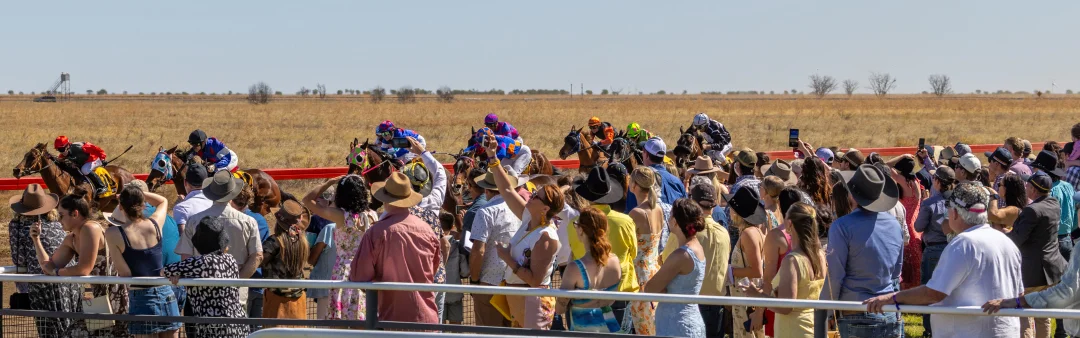

The people who make it happen
The Julia Creek Turf Club is run by a dedicated volunteer committee who give their time to keep this great tradition alive.
Honoured for a lifetime of service
Life membership is the highest honour the Julia Creek Turf Club can bestow. It recognises individuals who have given extraordinary service to the club and to country racing in North West Queensland.
The club family
The Julia Creek Turf Club has over 38 members: locals, graziers, families and racing lovers who share a common passion for keeping country racing alive in the North West.
Membership is open to anyone who wants to support the club and be part of one of Queensland's great outback race day traditions. Get in touch to find out more.
Club membership supports everything the Julia Creek Turf Club does, from keeping the track in shape to putting on a race day the whole community can be proud of. If you love country racing, this is your club.
Get in touch and we'll send you the details